viernes, 22 de marzo de 2019

ARRANCA LA TEMPORADA EN JEREZ, SBK LEGENDS y CIV 2019

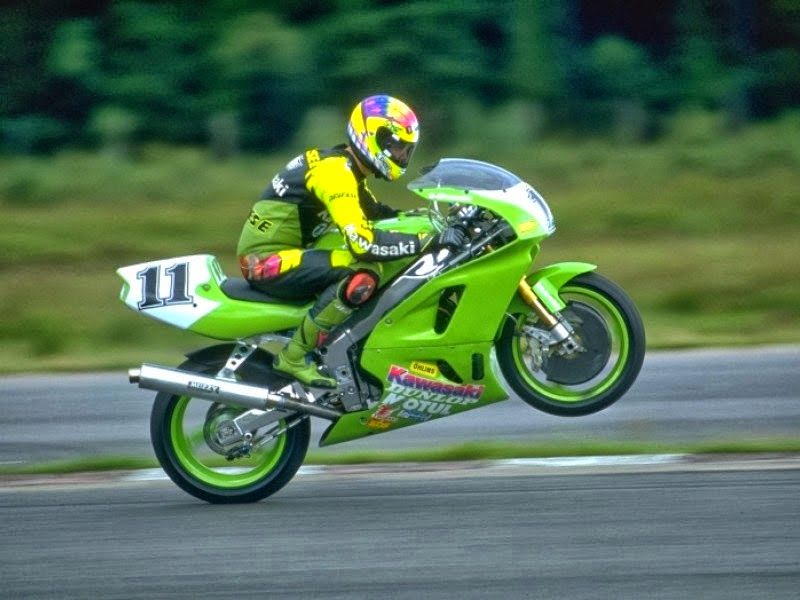
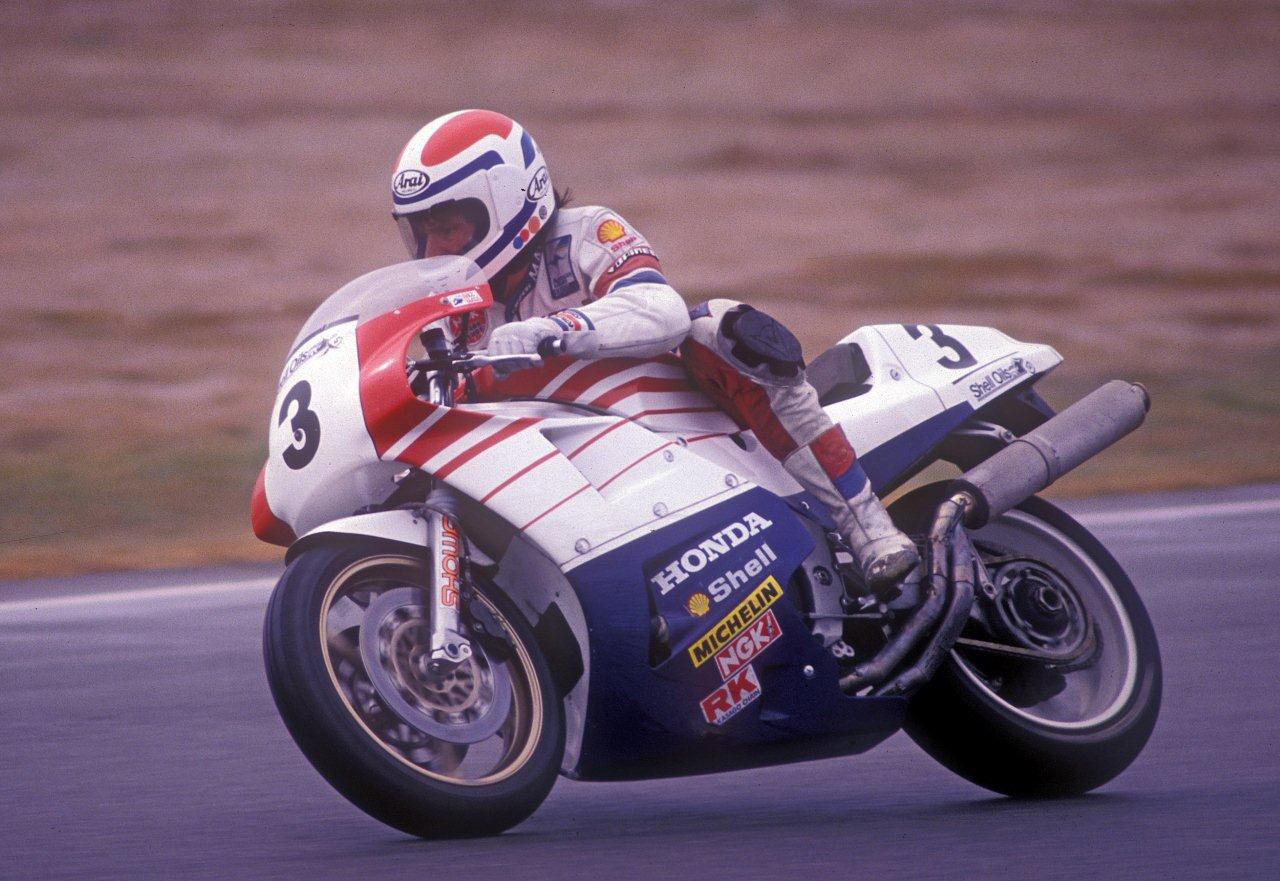
Este finde comienza la Temporada de Velocidad Nacional en el circuito de Jerez, prueba que inaugura el nuevo campeonato organizado por la RFME y DORNA y que incluye este año un Trofeo Nacional de Máxiclassic con reglamentos SBK 750 hasta el año 89 y SSP 600 hasta el 95.

Además se disputará también el CIV, que este año será monogoma, en las categorías SBK y SSP anteriormente citadas y una nueva EVO con reglamento SBK pero hasta el 95.

Una lástima no poder debutar en Jerez al igual que hicimos en 2017 debido a motivos laborales que nos han impedido bajar hoy para hacer los libres y tener la moto a punto como nos hubiera gustado.


Así teníamos la moto ayer a la noche, con perdidas incontroladas cuando ya debíamos estar camino de Jeré!!!

En Jerez estarán nuestro compañeros del Club Luis Illescas y Alejandro Cantalejo con sus SUZUKI de SS, que el año pasado por estas fechas estaban en Paul Ricard en las EELC, y también estará nuestro compañero en la Resistencia Carlos Carreira con su GSXR 750, los tres lucharán por la victoria así que veremos quien se lleva la primera prueba del SBK Legends, suerte y a disfrutar!!!


Carlos preparado para los cronos de mañana sábado!!!

Gasssssssssssss!!!


viernes, 15 de marzo de 2019

SBK LEGENDS 2019, nuevo Campeontao Nacional Organizado por la RFEM de motos clásicas!!!


NACE SUPERBIKE LEGENDS: ¡LAS MOTOS MÍTICAS DE LOS ‘80 Y ‘90 VUELVEN A PISTA!

El Trofeo revelación de la temporada 2019


Si eres amantes de las motos deportivas de finales de los ’80 y principios de los ’90 sigue leyendo. La RFME ha puesto en marcha un atractivo Trofeo para esta temporada en la que se darán cita todas estas superbike legendarias que supusieron el paso a la era moderna de la competición en asfalto.
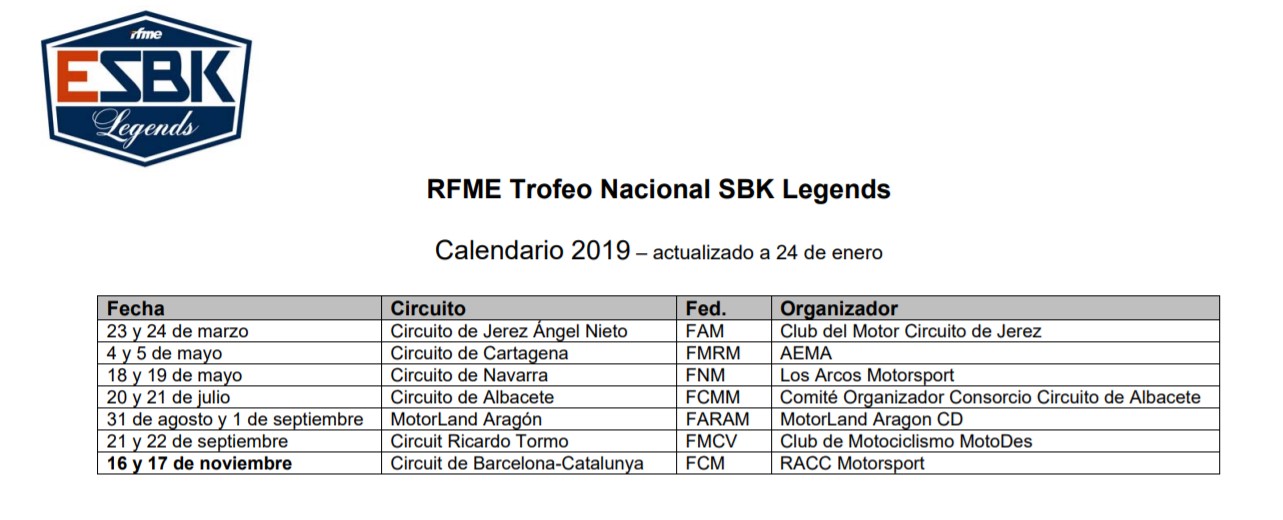
Tendrá un calendario de 7 carreras repartidas entre circuitos mundialistas y algunos de los trazados más emblemáticos de España. La primera cita será en Jerez el 23 y 24 de marzo y ¡ya están abiertas las inscripciones!
Están convocadas dos categorías dentro del Trofeo Nacional ESBK Legends:
  • Categoría SBK750:
Motocicletas de competición-sport hasta 750 cc (4c) hasta 1989
Motocicletas de competición-sport hasta 851 cc (2c) hasta 1989
  • Categoría SSP600:
Motocicletas de competición-sport hasta 600 cc (4c) hasta 1995
Motocicletas de competición-sport hasta 748 cc (2c) hasta 1995
No lo dudes. Las carreras con sabor de leyenda ya están aquí. ¿Te apuntas?

lunes, 11 de marzo de 2019

HONDA CBX 750 TT - MORIWAKI

http://www.trademotorcycles.com.au/honda-cbx750-tt-review-retro-racer/

There have been many milestones in motorcycle history, but there was one key development we often take for granted – that of liquid cooling for engines.
On streetbikes this was partly for noise reasons but on racers it was all down to chasing extra horsepower, and by the early ’80s either water cooling or oil cooling had become the norm for performance motorcycles.
Air-cooled bikes had already disappeared from the GP arena with the demise of the MV Agusta fours at the end of 1976, thanks largely to noise concerns. By then, all the two-strokes which came to usurp the supremacy of the Italian bikes were water-cooled, and in the following decade that trend spread to the new generation of large-capacity four-stroke racers based on volume production streetbikes – first the TT Formula 1 category featuring production engines mounted in racing chassis, then today’s Superbikes.
Despite its reputation for pushing the engineering envelope, the last air-cooled four-cylinder bike to be produced by any major manufacturer was a Honda – the air-cooled, 16-valve, DOHC CBX750 in-line four, known internally within Honda as the RC17. It would go on to have a very short shelf life, manufactured from 1984 to 1988.
The ultimate evolution of the legendary CB750, it was marketed primarily in Europe, South America and Australia, but was sold elsewhere as a police bike.
It’s widely accepted that the CBX750 was a stop-gap model that Honda produced in a relative hurry, in order to fill the gap between the unreliable VF750F of 1982 and the VFR750 (the RC24), which replaced it in 1986. Of course, as customers learned of the VFR750’s vast superiority to its VF750 predecessor, its sales took off, leaving the CBX in limbo.
However, Honda had already spent a considerable sum on bringing the CBX to market, and so it thought it better get some mileage out of it, and the promotion of the model that followed also involved racing it. Not by the factory HRC race operation, though – it already had its hands full with a variety of world championships – but with a local tuning house by the name of Moriwaki Engineering.

LOCAL TALENT
Mamoru Moriwaki had founded his company in Suzuka in 1973, before which he’d worked for Pops Yoshimura, whose eldest daughter, Namiko, he’d married. Like his father-in-law, Mamoru started out developing tuning parts for the new Kawasaki Z1 superbike, and then when Pops moved to LA and switched allegiance to Suzuki for 1978, it left Moriwaki as the top Japanese Kawasaki tuner.
First Graeme Crosby then Wayne Gardner brought Moriwaki Kawasakis to global prominence by their exploits with such bikes in Europe in the 1979-81 period, before the foundation of HRCin 1982 left the door open for a closer collaboration with Honda, which Mamoru-san gratefully accepted. One of his first collaborative projects was the creation of a TT F1 race version of the CBX750 in 1984, to relieve HRC of the burden of developing a race version of a bike which its corporate masters had dictated should be raced in order to generate interest in the model, but which didn’t fit into HRC’s game plan.
The alloy-framed twin-shock Moriwaki Honda CBX750TT1 RC17 racer was the result, a prime example of original thought which, but for two crashes by team rider Shunji Yatsushiro while well placed in crucial rounds, would have won the 1985 Japanese TTFl title convincingly. In doing so, he’d have beaten all the new factory RVF750 Honda V4s, plus the Yamaha Genesis and Yoshimura Suzuki teams – the latter racing the new oil-cooled GSX-R750.
As it was, Yatsushiro still came third in the 1985 series on his way to an NSR500 ride for him in GP racing the following season. In July that same year Aussie future 500GP ace Kevin Magee came to Japan for the first time to ride in the Suzuka 8-hour race on a Moriwaki CBX750 with established Superbike star Rob Phillis, but in the second qualifying session Magee highsided on some oil and broke his scaphoid. He went on to race despite the injury, he and Phillis crossing the line in ninth place!
Yatsushiro’s less-experienced colleague Hikaru Miyagi took over riding the Moriwaki CBX in 1986 after finishing sixth in the ’85 series on the team’s back-up bike, and repeated the championship position that year, all on a bike using allegedly outmoded twin-shock rear suspension and a supposedly uncompetitive engine. Yet it was impressive how well the Moriwaki CBX750 performed at Suzuka with its two long straights, quite apart from its remarkable reliability, which saw both team bikes finish practically every race they ever started, rider error excepted – such as guest rider Phillis’s first-lap retirement in the TT F1 international at Suzuka in November 1986 due to a fried clutch, a sad ending to the CBX750’s last-ever appearance at the top level of racing.

DIFFERENT STROKES
Having followed the Moriwaki CBX’s progress from afar with increasing interest over the previous two years, I was honoured to become the first person outside the team to ride the bike at Suzuka a week before Phillis’s short-lived re-acquaintance with it there. One look at the twin-shock rear end of the Moriwaki CBX was enough to tell you that its creator wasn’t one to be swayed by fashion, but even so the choice of Honda’s vastly underrated air-cooled 16-valve in-line UJM four to power a GSX-R/FZR/VFR challenger was, err, ‘idiosyncratic’. Never mind that the main reason for the street version’s less-than-brilliant sales figures was Honda’s own marked lack of enthusiasm in promoting it, doubtless for fear of diverting attention and sales from its water-cooled V4s.
The irony was that what turned out to be the last-ever air-cooled Japanese in-line four ever made was also arguably the best ever: it had taken Mamoru Moriwaki to make lemonade out of the lemon. To any nostalgic admirer of the good old days of meaty, mighty, air-cooled in-line fours from the early days of Superbike racing just a decade earlier, the CBX750TT1 seemed like a smaller-scale version of those spectacular bikes of yesteryear. The clean-looking, compact in-line four-cylinder engine was slotted into a simple but beautifully-constructed double-cradle chassis made from small-section extruded aluminium tubing previously seen only on Yoshimura Suzukis, with longitudinal ribbing for additional strength and rigidity. Oh, and with twin rear shocks. It was light (156kg with oil, but no fuel), compact, and uncluttered.
However, once I started questioning Moriwaki-san about his bike, I discovered that his reason for selecting the CBX750 power unit was even more pragmatic than I’d thought. Moriwaki Engineering’s then strengthening link with HRC enabled Honda’s racing division to pass over race development of the CBX engine to it, so that the blue and yellow Moriwaki CBX750TT1 was effectively a privateer bike with a factory engine. Like I said, even Honda has a back door to its HRC race shop! What’s more, without apparently advertising the fact anywhere outside of Japan, HRC had developed a series of race kits for the bike under the CBX750RK designation, ready for purchase by anyone wanting to follow in Moriwaki’s free-thinking, fashion-bucking footsteps.
These incorporated extensive engine modifications, including a set of forged two-ring pistons which with Moriwaki/HRC cylinder head work delivered a 12.5:1 compression ratio (stock was 9.3:1). The standard crankshaft was retained, polished but otherwise unmodified, fitted with steel racing conrods, though titanium ones were tried at first before being rejected on reliability grounds. For the same reason, the 0.5mm oversize valves (four per cylinder, remember) became steel after originally being titanium, because these had to be changed every 1000km, an expensive luxury. The twin overhead camshafts were HRC race kit components, ditto the valve springs, but the stock cam chain was retained. Finally, a beefed-up version of the standard oil-bath clutch was mated to a special HRC six-speed close-ratio gearbox, and the result fitted with a special four-into-one Moriwaki exhaust with larger-diameter headers compared to stock pipes aimed at producing more top-end power, at the cost of low and midrange grunt.
The result of all this was an increase in horsepower from 70.6kW (96hp) at 9800rpm at the crank in standard street form, to 86.8kW (118hp) at 10,500rpm at the countershaft sprocket on the racer, with the engine safe to 11,500rpm. But power tailed off above 11,000rpm, so there was no inducement to over-rev it unduly. Still, assuming the Moriwaki dyno wasn’t hopelessly over-optimistic, this was quite a remarkable output in the 1980s for any 750cc road-based four-stroke engine, let alone an air-cooled one. Compare that with the 78kW (106hp) shown in 1984 on the Heron Suzuki dyno by its air-cooled Yoshimura-developed GSX750R power units, or the 75.6kW (103hp) of the Kawasaki GPz750TT1 motor fitted to P&M frames for the British F1 series.
Okay, it was still 10 per cent down on power compared to HRC’s own V4 RVF750, but that’s no disgrace. More to the point, using the results of the Heron dyno once again (79.4kW/108hp for its less-than-reliable first-generation oil-cooled GSX-R750TT1 race engines in 1985/86) and Yatsushiro’s results in the Japanese F1 series as a guide, the humble air-cooled CBX750 unit was more than able to hold its own against anything else – including the water-cooled FZ750 Yamaha.

POWER DISPARITY
The superiority of Honda’s V4 RVF in terms of power over the CBX was well illustrated when I rode Joey Dunlop’s 1986 title-winning V4 that morning at my Suzuka test day, and was passed by the Moriwaki test rider on the CBX just before the back straight – my excuse was that he’d had a lot more practice getting the tricky Spoon Curve right leading onto it! But the way ‘my’ factory bike’s water-cooled V4 motor ate up the air-cooled semi-works one in a straight line after that showed just why it was the king of the Superbikes, allowing me to pass him back before the high-speed 120R turn.
However, when I came to ride the Moriwaki in the afternoon, I found its engine performance still pretty impressive in terms of the rest of the opposition: it was just that the RVF made almost anything comparable look pretty mediocre back then, especially via the rideability provided by its smooth power delivery and ultra-flat torque curve. The air-cooled CBX on the other hand was much peakier, and whereas the V4 pulled from practically zero revs, the in-line motor just spluttered and banged down low without very much happening below 7000rpm – then it chimed in big time. Still, there was noticeably less power at 8000rpm than at 10,000rpm, so with maximum power on tap at 10,500rpm you had to work the race-pattern gearbox hard to get maximum benefit from the HRC engine mods and that Moriwaki exhaust.
The ratios of the six-speed cluster were well chosen – with an average 1200rpm drop between gears they made the engine seem a lot less fussy than the similar ultra-close ratio gearbox on the TTF1 Suzuki GSX-R, where you’d be forever changing gear in spite of having an extra 2000rpm to play with compared to the CBX. The air-cooled Honda did have a narrow gap between fifth and top gear – just 700rpm – but this, according to Moriwaki, was to keep the engine pulling peak revs at places like the uphill finishing straight at Sugo, where it acted as a kind of overdrive. In general, you really had to keep it spinning in the upper 2500rpm band for maximum performance.
It took me a while to adjust to this mentally after riding the RVF that morning, because you absolutely couldn’t just let the CBX slog out of corners at low revs like you could with the V4, not only because of the engine characteristics, but also because of how it affected the handling. Initially, I was surprised to find the Moriwaki chassis tended to wash out the front end, especially on the winding uphill twists and turns behind the Suzuka pits leading to the Degner Curve, where there was significant understeer when getting on and off the gas.

CHARGE HARDER
Crouching flat on the tank in the bends in an effort to shift as much of my body weight over the front wheel as possible did help in this respect, but not as much as when I started using more revs, and a lower gear. The steering immediately improved, indicating that this was a bike which demanded to be taken through corners on the power, though the 1420mm wheelbase was quite normal then for a big four-stroke, and the non-adjustable 25-degree head angle was unremarkable for the day. I was surprised, though, to discover that the weight distribution was as much as 55/45 per cent biased to the front, more by accident than design since Moriwaki-san told me that in designing a frame, he placed more importance on a low centre of gravity than a front-heavy weight distribution. What this meant, however, was that when you did start taking corners hard on the throttle, the front end stayed glued to the road and the steering became nicely neutral.
Now let’s turn our attention to that twin-shock rear. In donning his chassis-designer cap, Mamoru Moriwaki told me he was unconvinced of the benefits of monoshock rear suspension, convinced he could obtain equivalent or superior compliance with twin shock units at the back offering greater overall torsional rigidity. If lengthened, these could yield the same degree of wheel movement, and thus offer as soft and compliant ride, leading to enhanced compliance and grip.
Kayaba was an enthusiastic partner in this experiment, and it made the special twin rear units fitted to the CBX. Gas-damped with remote cylinders, these were fitted with multi-rate springs that Moriwaki believed would offer the same kind of progressive-rate variation as a monoshock operated by a rising rate link – but without any potential for wind-up, and consequent overworking of the single shock. The Showa shocks on the CBX employed steel extensions that actually passed through the box section of the swingarm on each side of the wheel, and pivoted on brackets attached to the underside of each leg of the well-braced fabricated aluminium swingarm. This allowed that to be wide enough to accommodate the 3.85/6.50 x 18in rear tyre, yet gave the necessary lateral rigidity too, and allowed the long Kayabas to be mounted in a desirable fashion.
Thing is, you wouldn’t realise you’re on a twin-shock motorcycle if you didn’t already know the CBX wasn’t a monoshocker. The rear end was actually less stiffly sprung than almost any 250GP racer I’d ridden, giving a compliant, reassuring ride which ate up all the ripples and bumps which then abounded on the Suzuka surface. Suspension response was good enough to be unremarkable – the CBX’s front end actually coped well with the track’s imperfections, perhaps because Moriwaki had managed to acquire a set of the outstanding 41.3mm Showa forks fitted to the works V4 Hondas. This front end came complete with TRAC brake-operated anti-dive, though it still dipped quite a bit under brakes.

CONFIDENCE BOOST
Once you got used to its preference for being taken through corners with the power hard on, the Moriwaki chassis performed with total confidence. Moreover, not only did its alloy construction and various weight-saving touches result in a bike scaling 7kg less than the equivalent air-cooled, steel-framed Kawasaki-powered Harris or P&M TTF1 racers, but the overall effect was to make this 750cc four-stroke four-cylinder seem like a 500GP two-stroke in terms of the speed of steering response, and the ease with which it changed direction.
It felt like it was a lot lighter and smaller than it really was – delicate, almost, which is scarcely a term I’ve ever got used to applying to big, in-line fours! But the CBX750 engine was so narrow (especially because the alternator was placed behind the engine, here removed and blanked off in TT1 form) that it conveyed this impression, as well as reducing the frontal aspect.
In fact, the CBX750 had so much going for it in TT1 form, that the obvious question remained to be asked: why did nobody else ever race one seriously outside Japan? Part of the reason was the herd instinct, for although they like to pretend otherwise, road racers are slaves to fashion, and by then air-cooled race bikes were strictly for the history books – or the pages of this magazine. But the main reason was Honda’s own lack of enthusiasm for what was very definitely a short-lived interim model, which in turn seemingly led to a reluctance by HRC to promote the fact it actually did have a race kit available for it.
I’m bound to say I reckon a kitted CBX750 would have been a much more practical proposition for a private team than the hard-to-work-on V4 Honda – as several teams found out the hard way during the next decade, especially with the RC45. It would have proved at least as good a bet as the Suzuki and Yamaha fours with the added benefits of reliability thanks to its greater accessibility, born of simplicity. In fact, on the basis of my test I’d say a CBX750 equipped with HRC/Moriwaki tuning parts would have made a pretty competitive and cost-effective privateer bike for the debut World Superbike series which kicked off in 1988 – and was of course won by Fred Merkel on the semi-works Team Rumi Honda RC30. Too bad nobody ever tried to prove me right or wrong about that!

SPEX
Honda CBX750 TT

ENGINE
Type: Air-cooled, DOHC, four-valves-per-cylinder, four-stroke, in-line four-cylinder
Capacity: 747cc
Bore x stroke: 67mm x 53mm
Compression ratio: 12.5:1
Fuel system: 4 x 33mm Keihin CR carburettors

TRANSMISSION
Type: Six-speed HRC, close-ratio
Final drive: Chain

CHASSIS AND RUNNING GEAR
Frame type: Twin-loop full duplex cradle in extruded square-section aluminium tubing
Front suspension: 41mm Showa telescopic fork with TRAC brake-operated anti-dive system
Rear suspension: Twin shocks
Front brake: Twin 320mm discs with Brembo four-piston calipers
Rear brake: 200mm disc with Lockheed twin-piston caliper

DIMENSIONS AND CAPACITIES
Weight: 156kg (with oil, no fuel)
Wheelbase: 1420mm
Seat height: N/A
Fuel capacity: N/A

PERFORMANCE
Max power: 86.8kW (118hp) at 10,500rpm
Max torque: N/A
Top speed: 268km/h

OTHER STUFF
Year of manufacture: 1984
Owner: Moriwaki Engineering, Suzuka, Japan

jueves, 14 de febrero de 2019

martes, 5 de febrero de 2019

Preparando los detalles de la Temporada 2019: SAFETY FIRST #1

Empezamos con los preparativos de la Temporada 2019, y no todo va a ser motos...

La Seguridad es la parte fundamental y el objetivo #1, para garantizar la seguridad de nuestros pilotos y vehículos contamos con GAECOR,  con un bagaje y experiencia únicos nos asesoran y aseguran desde hace ya unas cuantas temporadas y seguirán con el equipo en esta Temporada 2019 que comienza.


La seguridad es un deber en nuestro deporte, y para ello además de en GAECOR contamos también con MT HELMETS, sus cascos y pantallas de alta calidad que nos protegerán y dan la visibilidad necesaria para pilotar concentrados sólo en la pista, además incorporan los sistemas PIN LOCK y TIER OFF que hacen siempre la vida más fácil al piloto.

Y por si la cosa se tuerce o necesitamos algún recambio ahí estará también #MotodespiecesMikel que nos garantizará los recambios o piezas para las monturas.


Lo dicho un equipo FIRST LEVEL para la Temporada que comenzará en breve!!!

Gassssssssss

www.gaecor.com

www.mthelmets.com

www.motodespiecesmikel.com


martes, 29 de enero de 2019

CALENDARIOS VELOCIDAD Y CLÁSICAS "DEFINITIVOS" (esperemos) 2019, yeahhhh!!!

Esperamos que esta sea la definitiva, ya hemos cuadrado en nuestro calendario de Velocidad y clásicas los campeonatos en los que el equipo estará de alguna manera presente. Lo compartimos con vosotros y si hay algún cambio os lo haremos saber y llegar a la mayor brevedad posible.


Estaremos presentes desde la Velocidad con nuestro piloto Valentín Carroza #67, recién proclamado Campeón Navarro 2018 de SSP 600, que participará en el Zona Norte y Navarro, compartiendo alguna salida en el CIV pero sin hacerlo de manera completa.

En Velocidad será duda nuestro otro Campeón Navarro 2018 de OPEN 1000, Mario Peru, quien en principio se centrará en 2019 en las clásicas, Resistencia incluida!!!

Hasta las clásicas llegamos entonces con el objetivo de participar en el nuevo Campeonato, por fin de carácter Nacional, organizado por la RFME para esta categoría, que se denominará SBK LEGENDS y contará con 7 pruebas en circuitos Mundialistas como Jerez, Cheste, Montmeló y Motorland, Albacete lo fue en SBK, Cartagena y el circuito de casa en Los Arcos.


Habrá que ver cómo responden los pilotos a este nuevo campeonato (antiguo CIV de clásicas básocamente), reglamentos, inscripción y demás para que se consolide a futuro.
En este Campeonato el objetivo será debutar con la nueva GSXR750 '88 y ponerla a punto, que el piltoo Mario Peru se adapte a la moto, ventaja que nos llevan ya nuestros compañeros de equipo Luis Illescas yAlejandro Cantalejo que ya llevan varias temporadas al lomo de estas monturas preparadas por David Illescas de SS con muy buenos resultados en 2017 y 2018.

El otro frente que tenemos abierto es la resistencia Catalana dónde haremos equipo con Carlos Carreira en el ALLCLASSIC #1, objetivo revalidar el título del 2018, será complicado ya que el nivel de la competencia sube cada año más, en 2019 varias RC30 en parrilla, pilotos del Mundial como Josep Monge... la batalla está servida!!!

Además del Catalán de Resistencia, tendremos otras 2 pruebas organizadas por la FCMM y AEMA en Cartagena y Albacete en el calendario de clásicas este año, a consolidar.

En lo que respecta a los Campeonatos de casa tenemos novedad importante, por un lado la inclusión del mítico trazado del Jarama en el Zona Norte, Navarro y nueva COPA EVO.  pendiente de confirmar para el SBK LEGENDS Este circuito es un cambio importante ya que será nuevo para la mayoría de los pilotos del Zona Norte, algunos habrán corrido en la época, la mayoría no, algunos habrán rodado en tandas y otros no por lo que la rápida adaptación a un trazado de la vieja escuela "OLD SCHOOL" será crucial para poder rodar rápido en el circuito Madrileño.

La otra novedad es la Copa EVO, que suponemos tendrá un reglamento similar al de 2018 que no existió del CIV EVO, con motos hasta el año 95 de acurdo al reglamento SBK de la época, que en teoría dará cabida a las réplicas de las SBK comprendidas entre el 90-95, que a priori será una Copa monomarca YZF750 ya que era de serie la moto más competitiva y avanzada de su tiempo, todo se verá en unos meses!!!

Incluimos también las tandas en el Circuito de Navarra para todos los socios o piltotos y aficionados de la Zona que quieran rodar en el Circuito Losarqueño!!!

Gassssssssssssssssssss!!!

miércoles, 23 de enero de 2019

Calendarios "Pseudo" Definitivos de Clásicas 2019: Navarro, Zona Norte, Catalán y SBK Legends/CIV

Con el calendario Catalán de Velocidad de Clásicas ya cerrado, y el Navarro / Zona Norte también confirmados al 99% podemos decir que la suerte está echada, luego seguro que habrá cambios pero bueno, this is another story...

Incluimos el Catalán de Resistencia y un par de pruebas que organizará la FCMM también de resistencia en lo que denominamos CIV, que será el SBK Legends de carácter Nacional.
La resistencia parece que va en aumento, veremos si se van consolidando las diferentes pruebas.

Corrección: Se cae del calendario provisional del CIV/SBK Legends la prueba de Montmeló de Junio, una lástima no poder ir en Junio a este circuito Mundialista con su espectacular trazado y tener fecha para el 16-17 de Noviembre...

Calendario Trofeo Nacional SBK Legends 2019

Actualizamos el calendario e incluimos las Tandas del Circuito de Los Arcos, que pueden sufrir cambios también, pero de momento es lo que tenemos y queremos compartir con vosotros.

Ya falta menos!!! ;-)

Gasssssssssssssssssssssss!!!


domingo, 20 de enero de 2019

CALENDARIOS PROVISIONALES NAVARRO Y ZONA NORTE DE CLÁSICAS 2019

Como el título del post indica, son PROVISIONALES, así que de momento que sirvan como una guía, falta por incluir la nueva Copa EVO que se disputará en circuitos y fechas diferentes que el CIV de MAXIS (SBK Legend y SSP) esta temporada 2019.

Aquí dejamos la actualización para que vayáis reservando fechas y afinando las máquinas:


GALA DE ENTREGA DE PREMIOS 2018 DE LA FEDERACIÓN NAVARRA DE MOTOCICLISMO (Circuito de Navarra)

Ayer sábado 19 de enero (San Mario) tuvo lugar la entrega de galardones a todos los pilotos Navarros que obtuvieron un título tanto regional, como Nacional en la multitud de disciplinas que tiene nuestro deporte. desde el Trail a la Velocidad, pasando por el enduro, motocross, etc.

Entrega altamente concurrida por todos los pilotos galardonados en las diferentes disciplinas y categorías respectivas. En lo que al club deportivo EGÜÉS-SKULL se refiere no nos podemos quejar, ya que sólo hemos participado en los Campeonatos Navarro de OPEN 600 y 1000, Navarro de MAXICLASSIC y Zona Norte de MAXICLASSIC y en todos ellos hemos podido lograr el título o el podio:

1º Clasificado Cto. Navarro OPEN 1000: Mario Peru Beramendi

1º Clasificado Cto. Navarro OPEN 600: Valentín Carroza Madurga

1º Clasificado Cto. Navarro MAXICLASSIC: Mario Peru Beramendi

2º Clasificado Cto. ZONA NORTE MAXICLASSIC: Mario Peru Beramendi

Además de la entrega, aprovechamos para sonsacar al Capitán, Chivite, algo sobre los calendarios de Velocidad del ZONA NORTE y NAVARRO, tanto de Clásicas como de SSP y SBK, nos adelanto el provisional que publicaremos una vez confirmen la fecha de Alcarrás para MAXICLASSIC.

Adjuntamos unas fotos de los galardonados del club EGÜÉS-SKULL y de los "clásicos" de la Velocidad Navarra.

Luego a falta de piscolabis oficial de la Federación o del Circuito, nos fuimos a contar mentiras y tomar unas cervezas en amor y compañía!!!

En breve esperamos empezar con el GASSSSSSSSSSSS!!!


Egüés-Skull Campeones Navarros de OPEN 600 y OPEN 1000


1º y 3º clasificados MAXICLASSIC 2018


Galardonados Zona Norte de clásicas 2018


Podium CIV categoría EVO 2018 y Campéon CIV F2


 Carvezas y Trofeos para todos!!! 


viernes, 18 de enero de 2019

CALENDARIOS 2019 CLÁSICAS Y VELOCIDAD

Mañana 19 de enero (San Mario) la Federación Navarra de Motociclismo llevará a cabo la entrega de premios a sus pilotos de todas las especialidades en sus respectivas categorías tanto de los Campeonatos Navarros, como del Zona Norte y CIV a quienes les corresponda.

Esperamos también que se confirmen los calendarios de los Campeonatos Navarro y Zona Norte de Velocidad, que son los que nos afectan de lleno, ya que los calendarios del CIV, Catalán, Manchego, etc. están ya definidos y publicados. Esperamos por tanto actualizaros con alguna foto de la entrega de galardones y los calendarios, al menos provisionales, de los citados campeonatos.

Nos vemos, gasssssssssss!!!


viernes, 28 de diciembre de 2018

INOCENTADA!!!! Primera prueba de Resistencia de Motociclismo (Clásicas) en el Circuito de Navarra para 2019

Estamos de enhorabuena los amantes al Motociclismo Clásico y la Resistencia. Tras haber sido duras las negociaciones con el Circuito, Federaciones organizadoras y clubes promotores podemos decir que el próximo año Navarra contará con su primera prueba de Resistencia de Motociclismo Oficial en el Calendario.


El formato tras haberse barajado varias opciones (una incluso de 24h!!!) será novedoso ya que va a consistir en una prueba de 8h, estilo SUZUKA dónde para dar mas emoción la prueba comenzará a las 13.00 y finalizará a las 21:00. Esto implica que los pilotos tendrán que adaptarse a unas 2h de conducción nocturna y las motocicletas tendrán que estar provistas de la correspondiente iluminación.


De este modo podemos decir que Navarra se rinde a la Resistencia Catalana, o se alía, y esto es así ya que la prueba Navarra será parte de la Copa Catalana de Resstencia, que se disputa en los trazados de Alcarrás (LLE), Castellolí (BCN) y Calafat (TA), gracias a las instalaciones del Circuito Navarro es por lo que la Penya Motorista de Barcelona, con Javier Gil a la cabeza organizadora del Campionat, se ha decantado por darle ese puntito EXTRA de subir 4h más la duración de la carrera de Calafat, ya que las de Castelloli y Alcarrás se disputan a 3h..


La prueba tendrá marcado carácter internacional ya que se disputará junto con el Campeonato Francés de Clásicas que siempre celebra una prueba en el mes de Mayo en el trazado Navarro, esto hará que equipos del EEC y PROCLASSIC francés se animen a participar en esta primera prueba de Resistencia de 8h a disputar en el trazado de Los Arcos. 

Os esperamos a todos e iremos adelantando noticias de esta carrera, ir poniendo luces a vuestras monturas para dar mucho gasssssssss!!!


NO HAY PRUEBA, SE TRATA DE LA INOCENTADA ANUAL POR SI HA PODIDO GENERAR DUDAS SENTIMOS EL MALENTENDIDO, DISCULPEN LAS MOLESTIAS, sobretodo aquellos que ya empezaron a recortar los carenados para meter las luces!!! ;-)


miércoles, 26 de diciembre de 2018

FELICES FIESTAS Y PRÓSPERA NUEVA TEMPORADA 2019 - MERRY CHRISTMAS & HAPPY NEW 2019 SEASON!!!

Desde el equipo EGÜÉS-SKULL queremos aprovechar estos días y la entrada al nuevo año para desearos lo mejor a todos vosotros y vestras familias, que paséis unas buenas fiestas y que la Temporada 2019 os sea próspera y supere si es posible a la que en breve termina tanto en lo personal como en lo deportivo!!!

FELICES FIESTAS Y PRÓSPERO AÑO NUEVO, en el que podáis dar muuuucho GASSSSSSSSSS!!!

PD: Nos vemos en las carreras!!! ;-)


lunes, 10 de diciembre de 2018

Ferrari 643 F1 Car V12 Sound at Imola Circuit

El sonido del Ferrari F1 V12 del profesor Alain Prost no lo podrá igualar ningún motor de lavadora, batidora, thermomix, taladro, Scalexric,etc.

Pero lo que es peor es que ahora cualquier fabricante de electrodomésticos, herramientas, o incluso juguetes se creerá con los conocimientos, experiencia y aptitudes necesarios para diseñar lo que ellos llamarán coches o motos, cuando el corazón, alma o parte más ensencial de estos ingenios mecánicos es eso... su mecánica!!!


Quien es capaz de diseñar un V12 como el del Ferrari F1 643 por ejemplo??? Los V12 de BMW, MERCEDES, ASTON MARTIN, LAMBORGHINI, etc.???


Que penica y que gran bluffff el de los trastos eléctricos... Esperemos que los fabricantes de coches y motos de verdad no entren al trapo y se resistan a caer en esta farsa!!!


Ainsss... Cómo vamos a dar gassss así???Será darle al botón de ON - OFF y llevar en los cascos la música de aquellos maravillosos años!!! ;-)


martes, 20 de noviembre de 2018

Al mal tiempo buena cara: CX Arbulo 2018 en vez de ZN Los Arcos...

Suspendia la carrera del Zona Norte del fin de semana del 10 y 11 de noviembre cambiamos de tercio, el sábado 1 de noviembrese disputó el CX de Arbulo, prueba puntuable para el circuito de CX de la Federación Vasca pero además también decidiría los nuevos Campeones 2018 de Alava en todas las categorías disputadas.

Fotaza de Ciclocross vivo en Arbulu CX (10-11-18)


Tras debutar en Orduña, hace casi un mes, por circunstancias varias no habíamos podido disputar ninguna otra prueba, ni entrenar como es debido; esto unido a un viaje a la India de una semanita por motivos laborales nada más correr en Arbulo, hacia que la motivación y entusiasmo no fuera baja, sino negativa podríamos decir...

Pero gracias a la coach, manager, fan #1, sofróloga, y sobretodo amore mío que me dijo: "Vete y disfruta, sin presión!!!" pues allí que nos animamos, la pena es que entre ponte bien y estate quieto salimos a las 10 y pico de casa, para llegar a Arbulo, aparcar, poner el huevo, ir a por el chip a las 11:15 y nos dice la juez: "Acabamos de cerrar las inscripciones!!!"
"Pues nada, una pena..." le digo, y me contesta: "Anda dime el dorsal, pero salís a las 11:40 y la parrilla se monta a las 10:30, tenrás que darte prisa!!!".

Así se puso la bici sólo de ir a por el chip... buen día para estrenar y poner a prueba las nuevas zapas!!!

Corriendo al coche, nos ponemos el disfraz, el de los días de barro de BARRI, y al lío!!! Ni reconocimiento al circuito, ni calentar, ni nada!!! Directamente a toriles, llego tan tarde que me quedo detrás de los M30 de primeras, que igual es mi sitio, me van a pillar enseguida... Pero bueno ya me dejan pasar y en menos de un minuto: Piiiiiiiiiiiiiiiii!!! Salida!!!

No salimos mal del todo, un poco atrás pero en el asfalto nos colocamos hacia mitad del pelotón, pena es que en la primera curva nos colamos (es lo que tiene no conocer el circuito) y para atrás otra vez, a lo que sería nuestro lugar de carrera más o menos.

La primera vuelta a modo de reconocimiento bastante bien, el circuito es chulo, está prácticable y por suerte para los carreteros no es muy técnico, hay un par de zonas con barro dónde a pesar de ser en bajada es necesario tirar de rión pero bien, no hace falta bajarse.

Hay una rampa en la que si que nos tenemos que bajar y ahí perdemos un poquito de tiempo, por desconocimiento del trazado y torpeza, juas, juas!!!


La segunda vuelta ya no es entrar en lo desconocido, pero si que pagamos el esfuerzo de salir si calentar... diosss que ganas de bajarme de la burra, ahora que ya sé para dónde van las curvas!!!
Tras levantar un poco el pie para coger aire pasamos por meta y veo L3!!! No jodas!!! Van a ser 5 vueltas al final??? Jodo, si casi no termino la segunda...30" más que en la primera vuelta empleamos para la segunda.

Así que nos lo tomamos con la calma que puede suponer una carrera de CX pero con el objetivo, como bien ha dijo la JEFA de disfrutar,  así lo hacemos.
Mejoramos los tiempos de la 2ª a la 3ª, y luego de la 3ª a la 4ª y bajando también en la 5ª y última vuelta, aunque cierto que es que la mejor fue la primera, hecho este que nos costó sacrificar las demás... pero bueno ya espabilaremos!!!


Unas fotos cortesía de Ciclocross Vivo


En lo deportivo la clasificación justica, al final del paquete pero sin doblarnos. La parte física da muestras de nuestro estado de forma: 185 ppm de media y sólo 192 de máxima, lo que hace que no hayamos subido de vueltas como esperado y hemos ido al corte toda la carrera...

Pero bueno la receta la conocemos, ahora sólo hace falta poder aplicarla!!! A ver si lo podemos cumplir y nos vemos en Lezama el próximo domingo.

Gassssssssss y a disfrutar!!!


Proclamados los nuevos campeones de Alava de Ciclocross 2018